


Guest blog - Trauma, trust and bedtime: A foster carer's experience

Updated: 7 days ago
Hi, I'm Christina. I'm a mum, a single parent, and a local authority foster carer for Surrey. (Yes, fostering isn't for the faint-hearted, and yes—you can absolutely foster without a partner!)
Alongside fostering, I'm a trainer for Surrey's Skills to Foster course, a fostering panel member involved in approving new foster carers, and I support Surrey's recruitment efforts by buddying prospective and newly approved carers.
When I first became a foster carer, I was surprised by how often children would arrive at my home, having never met me before, with a smile on their face and ready to play. Yet it goes without saying that this can often mask deep hurt and emotional scars resulting from their experiences.
My primary role is to help children feel safe and, from that foundation, provide the support they need to flourish. In short-term fostering, that can be incredibly challenging. Feeling safe and secure is not just about what a carer can provide day to day; it is also about having certainty about the future. Unfortunately, that is often something we cannot offer.
The children I have cared for have all moved on to different futures. Some have returned home to their families, others have moved to long-term fostering families, residential homes, kinship care arrangements, Special Guardianship Orders (SGOs), or adoption. My greatest hope for each of them is that they now have the security of a known future, giving them the stability and confidence they need to thrive in the present.
Over the last ten years, I have cared for more than 30 children, from newborn babies to teenagers. Each child has arrived with their own personality, strengths, worries, and experiences. All have experienced some level of disruption, loss, or trauma.
While children are with me, there are many things that matter: maintaining routines, following through on promises, staying calm when emotions run high, helping them learn that adults can be trusted, and making time for fun, shared experiences, and positive memories.
When children first come into care, they are navigating enormous change. New faces, new rules, new schools, new bedrooms, and new expectations can feel overwhelming. Supporting them through that transition is both hugely rewarding and enormously challenging.
Much of my approach has been influenced by Sarah Naish's work on trauma-informed and therapeutic parenting, alongside Dan Hughes' PACE model. One of the things I value most about Sarah's work is her emphasis on understanding the reasons behind behaviour rather than focusing solely on the behaviour itself. Children who have experienced trauma often respond to situations through the lens of what has happened to them, and recognising this can completely transform the way we parent.
Sarah's approach to logical & natural consequences and therapeutic parenting has taught me to be curious rather than reactive. That shift in perspective helps us respond with empathy while still providing clear boundaries and structure.
Similarly, the PACE model reminds us that connection comes before correction. Building a trusting, connected relationship must be the priority if children are to feel safe enough to learn, heal, and grow.
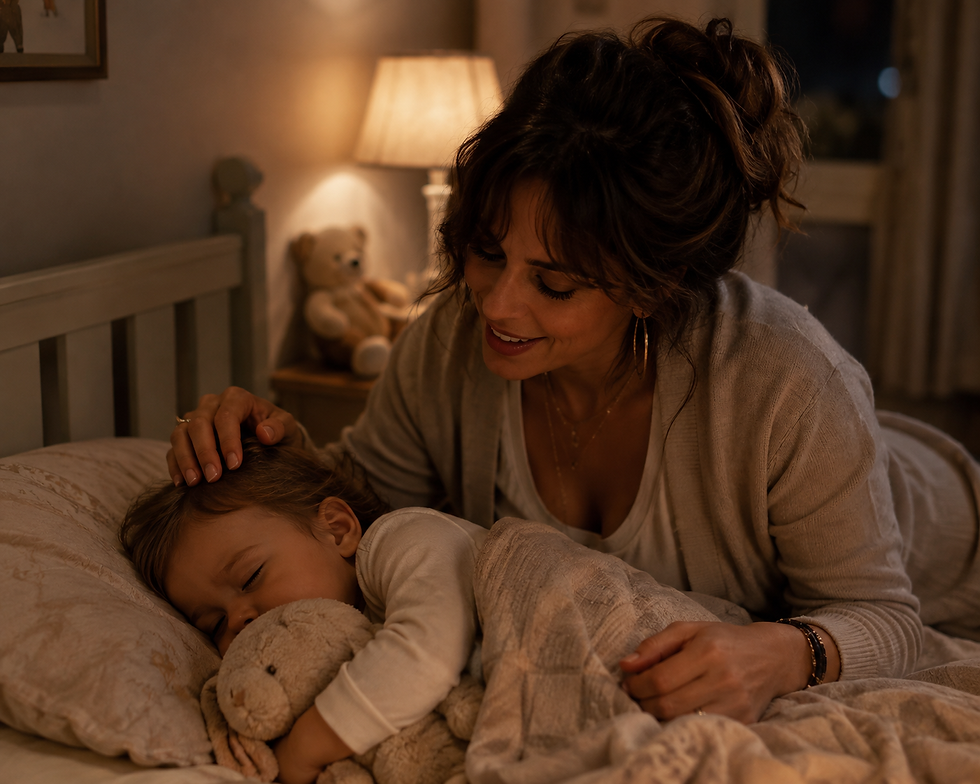
Sleep is one area where this understanding has been particularly important. Over the years, I have learned that there is no universal pattern to children's sleep. Some children settle easily, while others find bedtime incredibly challenging. Their experiences can profoundly influence whether being alone in a bedroom, or the act of falling asleep itself, feels safe.
What fostering has taught me is that safety and trust cannot be rushed. They develop at different times and in different ways for every child. Children need to know that we are consistently there for them before they can begin to feel confident on their own.
Of course, there is no formula in fostering. What works for one child may not work for another. Every child's needs are shaped by their individual experiences, and fostering continually reminds me that there is always more to learn.
Whenever I have felt unsure, I have found enormous value in seeking support from others who understand trauma and attachment and have provided thoughtful, tailored, evidence-based advice and encouragement along the way. This has included Sarah Naish's work, my local Mockingbird fostering support group, and Paediatric Sleep Practitioner Maddy Thompson (Balanced Bedtime Sleep Consultancy), whose article on why looked-after children struggle to sleep can shed further light on the topic.
If you have ever considered becoming a foster carer, I would encourage you to find out more. Contact your local authority fostering team, or if you are based in Surrey, follow
the link below and mention my name when you enquire.
Christina's Fostering Journey (Name changed to protect anonymity)
The above guest blog has been written by an experienced Surrey foster carer who has kindly shared her experiences of caring for children who have experienced trauma, loss and significant change. To protect her family's privacy, her name has been changed to Christina throughout this article.
Although "Christina" is not her real name, the experiences she describes are genuine, and she continues to play an active role within Surrey's fostering community through providing a home for looked after children, training, mentoring and supporting prospective foster carers. If you are exploring fostering with Surrey and would like to learn more about her experiences, you can still mention Christina when making your enquiry and the team will understand who you are referring to.


Comments